
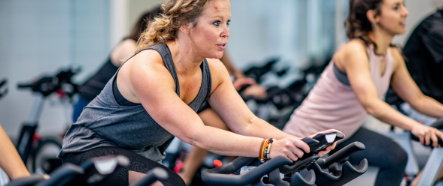
You Don’t Need to Smash Yourself to Support Menopause
Let me start by saying this clearly, because so many women need to hear it:
you do not need to smash yourself in the gym to support your body through
perimenopause or menopause.
Somewhere along the way, exercise became synonymous with exhaustion, sweat,
and “no pain, no gain.” And while that approach might have worked (or at least felt manageable) in your 20s and 30s, menopause changes the rules.
During perimenopause and menopause, hormonal fluctuations affect energy levels,
recovery, sleep quality, muscle mass, and stress tolerance. Cortisol regulation
becomes more fragile, and pushing too hard, too often can actually worsen common menopause symptoms like fatigue, anxiety, poor sleep, joint pain, and even stubborn weight gain.
Here’s the science-backed truth: moderate, consistent exercise is one of the most
effective tools we have to support menopause health. According to guidelines
outlined in your Exercise to Support Menopause Guide, just 30 minutes of moderate exercise most days of the week can significantly improve cardiovascular health, energy levels, mood, and symptom management. We’re talking about walking,
cycling, swimming, dancing, or low-impact cardio. These forms of aerobic exercise
improve heart health at a time when declining estrogen increases cardiovascular
risk.
In fact, heart disease becomes the leading cause of death in women after
menopause, making regular cardiovascular movement non-negotiable for long-term
health.
But here’s where women often go wrong: they assume if some exercise is good, more intensity must be better. In menopause, that’s not always true. Your nervous system matters. Your pelvic floor matters. Your ability to recover matters.
Exercising at a level that feels sustainable, where you can still breathe, still talk, and
still show up again tomorrow, is far more effective than sporadic all-out workouts
followed by burnout.
Strength training is also important, but again, this doesn’t mean lifting at maximal effort. Many menopausal women do best training at moderate intensities, focusing on functional movements like squats, hinges, lunges, pushes, pulls, and carries. These movements support muscle mass, bone density, balance, and real-life strength without overwhelming the body.
If you’re leaking, feeling pelvic heaviness, or constantly exhausted after workouts, it’s not a sign you’re weak. It’s a sign your body is asking for a different approach.
The goal of exercise during menopause is not punishment.
It’s support.
When movement leaves you feeling clearer, steadier, and more capable, you’re
doing it right. Consistency beats intensity every single time. So reach out to me or
follow me at @thrive_within_menopause for honest guidance and even download my
free exercise to support menopause guide.
Exercise Physiologist & Women’s Health Specialist – Liz Taylor
Director – Revitalize XPP & Thrive Within Menopause
Liz Taylor
Feeling overwhelmed or unsure where to start? You’re not alone. We’re here to listen, guide, and create a plan that helps you feel like yourself again — stronger, supported, and confident.
Stay In Touch
Office
162-178 Keilor Road, Essendon North VIC 3041
Phone Number
0408 169 499
thrivewithinmenopause@gmail.com.au